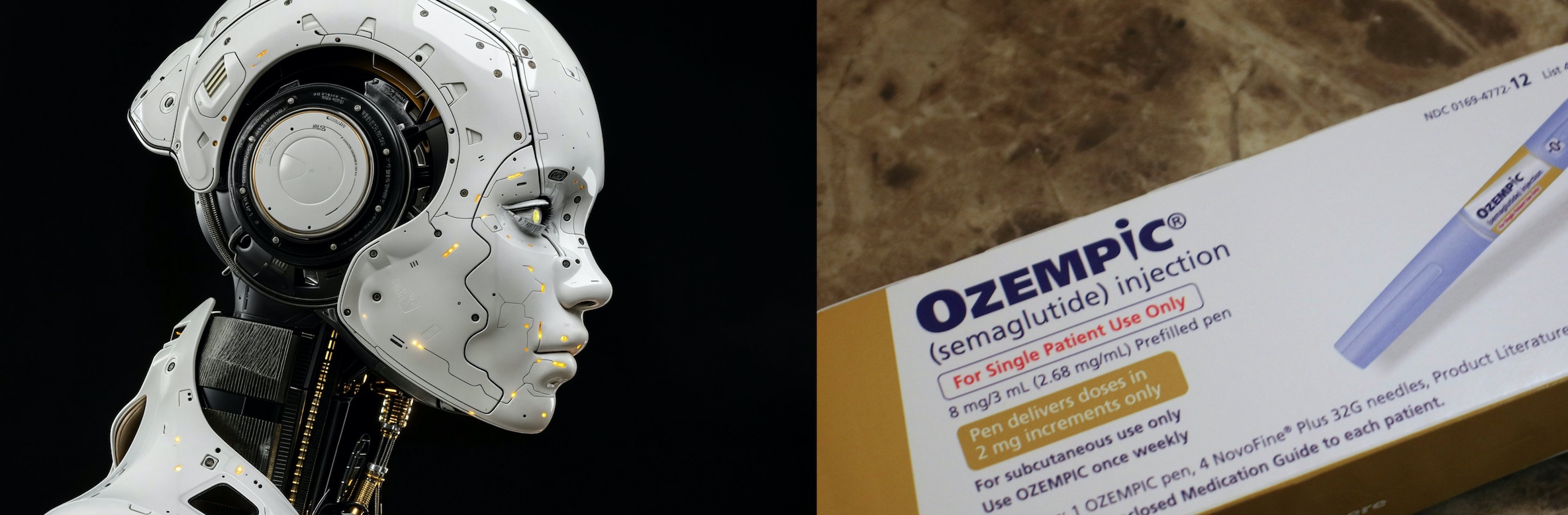
When I wrote this article in 2025, a general opinion amongst the foremost AI company leaders and researchers in the US was that Superintelligence would arrive within 10 years. Now, at the beginning of 2026, that prediction is within 5 years. So swap 10 for 5 in the article.
Lästid: 15 minuter.
Article 3/4 on the threat of AI: What can the EU do to avoid the US using Superintelligence to crush the EU’s competitive edge and prosperity?
There is no discussion in the European Union, EU, in influential media or amongst responsible politicians of what will happen economically to the continent when the leading AI companies of China and the US reach Superintelligence. That is AI that can create new knowledge and new products of a sophistication and quality we cannot imagine today.
Av Timothy Tore Hebb.
> In that case, it is obvious the EU cannot remain industrially competitive. This article concludes with two possibilities that could save us economically. Though, one is quite unlikely.
The most insightful researchers and founders and leaders of the few AI companies in the US competing for Superintelligence believe it will arrive in about ten years. But a few think it might be here in only five years or so, like Geoffrey Hinton, who received the Nobel Prize for developing the foundation of AI, the so-called neural networks.
So in a few years, the US and China can begin making products that the EU could never produce despite having had a competitive advantage in those markets for decades. Just to name two examples: medicine and car making. The examples could go on and on.
Think about all the critical companies — absolutely essential when it comes to creating jobs and wealth on our continent. How would the EU look without the great industrial and knowledge companies. The Swedish global companies are totally dependent on imports from abroad. They compete in ruthless markets. Without them, there would be no affluence and for many strong welfare state.
This economically existential — how else can one describe it — risk is not discussed at all in the EU amongst accountable politicians. This especially goes for those at the highest level in the EU. Newspapers that influence opinions should focus on this challenge too.
There is only one AI company in the EU with some future strong AI potential. How intelligent a company’s AI can become is to a large degree reflected by how the market values the AI company. It looks at future profits.
US OpenAI, with ChatGPT, is valued at 500 billion dollars (October 2025), according to its latest sale of shares. It is the most valued private company in the world. Anthropic, with Claude, is valued at 183 billion dollars (September 2025).
French AI company Mistral is probably the only European with this potential to create some sort of highly intelligent AI. Mistral was valued at 14 billion dollars in September 2025. That probably says a lot about how the market appraises Mistral’s future chances of succeeding in achieving even very intelligent AI.
But Mistral’s goal, since it cannot do so, is different. It want to provide ordinary AI services to companies, organisations and governments.
So under present circumstances, it will evidently be impossible for Mistral to match Google, OpenAI and Anthropic in aiding France in developing new revolutionary medical and industrial products that can compete with the US and Chinese ones in only a few years when Superintelligence arrives. Such as new medicines to treat different cancer forms or creating clean energy that hardly costs anything. And so on. In this case, Superintelligence is the Holy Grail.
Is it likely that the US AI companies will share Superintelligence with Europeans?
Many believe the US government will nationalise the leading AI companies, because it will be so powerful, especially militarily, such as the prominent AI researcher Leopold Aschenbrenner.
What is to come is illustrated by what has already happened. We only have to study what effects when a new technological disrupter occurs. Now, enter (most likely) the Mother of all disrupters.
The most prominent scientific innovation (so far) thanks to AI is Google DeepMind’s AlphaFold. It is a good example of how Superintelligence will be used to gain a competitive advantage.
The Nobel Prize in medicine in 2024 ought to have been shared with AI. Only because of AI, it was possible for Demis Hassabis, founder of leading AI company DeepMind, and his team to create AlphaFold.
AlphaFold helps improving old medicines for diseases, invent better new ones for those diseases, but most impactful will be new ones for still untreatable diseases. DeepMind explains AlphaFold:
”Proteins underpin every biological process, in every living thing. Made from long chains of amino acids, each has a unique complex 3D structure. But figuring out just one of these can take several years, and hundreds of thousands of dollars. In 2020, AlphaFold solved this problem, with the ability to predict protein structures in minutes, to a remarkable degree of accuracy.
That’s helping researchers understand what individual proteins do and how they interact with other molecules. So valuable time and resources can be redirected into advancing research that could help solve society’s biggest medical and environmental challenges.”
About 200 million proteins have been predicted by AlphaFold.
AI is getting more and more helpful for top researchers. Leading mathematicians are solving problems up until now unsolvable. But, still, human assistance is mostly needed. One example: Terence Tao solved a few of the Erdős problems thanks to ChatGPT 5.2. This goes for physicists, biologists, chemists, and so on.
An advanced version of Google Gemini achieved the gold standard in the International Mathematical Olympiad in 2025. This is considered a pivotal moment in AI development.
Matt Shumer, a software engineer and coder, wrote a long article on x that received millions of reads and thousands of comments. It was published on February 9 of 2026 and the background is the extremely powerful new AI models from Anthropic and OpenAI that were released shortly before. Matt Shumer writes:
“I am no longer needed for the actual technical work of my job. I describe what I want built, in plain English, and it just… appears. Not a rough draft I need to fix. The finished thing.”
And Mike Krieger, Anthropic’s Labs chief, revealed in February of 2026 that Anthropic’s internal development teams now use Claude AI to write nearly 100 percent of code for the company’s products. Its popular Claude Cowork was developed entirely with Claude AI. In 1.5 weeks!
Jaana Dogan, one of Google’s chief engineers, in a tweet on January 2nd 2026, about the challenge to make different agents cooperate
”I’m not joking and this isn’t funny. We have been trying to build distributed agent orchestrators at Google since last year. There are various options, not everyone is aligned… I gave Claude Code a description of the problem, it generated what we built last year in an hour.”
And so it goes on and on. Already.
Superintelligence will as time goes by be many times more intelligent than Albert Einstein or the best medical researchers that have ever lived and live today. No one knows how much more. Maybe 10 or 100 times? And companies can have as many as they want working for them.
Because AI researchers are developing AI agents where one AI agent equals one researcher (one can describe it this way). They are kind of is set free to achieve a goal decided by a human being — soon, very soon, an AI agent can decide the exact goal itself. How could we compete? And the AI agent will use subgoals to reach that goal. We will definitely not understand what they are up to. 2026/ 2027 will be when AI agents take off, according to the leading researchers at the AI labs.
An obstacle has been that AI lacks continuous learning, which is necessary to learn new skills. But it is being solved with new algorithms. It will appear as if this advanced AI has a free will of its own. And it will be able to write its own prompts better than any human. We will just sit there watching it revealing new innovations and discovering new knowledge.
This brave new future has only begun to take its first few baby steps.
Imagine 1,000 such agents, each equivalent of a human superresearcher, developing one medicine and them working individually next to each other and as a team. And as soon as one learns a new skill, the other will be injected with it too.
This is an intelligence that can come up with its own theories and hypotheses, conducting its own analyses from an amount of new and old data totally impossible for humans to find and process, in unimaginable creative ways. Superintelligence will see connections between data that no scientist could ever imagine. It is already happening, and AI will only get exponentially better. Therefore, revolutionary scientific breakthroughs and new products.
In a not too distant future, AI can do it virtually. Imagine new medicines that can be tested and evaluated just by AI in a virtual lab without almost any human input. Since it is possible to test if medicines work and do not cause harm.
Another eye-opening milestone of what AI can do, a trait that will shoot right up into the sky with Superintelligence: DeepMind developed AlphaGo to master the ancient (more than 2,500 years old) Chinese board game Go where two players try to conquer the most territory on a board by moving around stones that positioned right remove the stones of the opponent.
Usually each player has 180 stones in either white or black and the board is a plain grid of 19 horizontal and 19 vertical lines. It is kind of like an extreme form chess.
This was game two of five, where South Korean Go master Lee Se-dol lost against AlphaGo. Se-dol won one game. It took place in 2016.
AlphaGo played what is now a symbolic move that shows how AI works, how Superintelligence will think. Move 37 is the move that no other of the world’s greatest living players had made. Probably no player ever. Everybody thought it was a mistake or just a bad move.
Probably, no human could ever see its strategic potential. It demanded such foresightedness and complex understanding. One commentator, also one of the world’s greatest Go players, thought it was a miserable mistake. Afterwards, he explained it was beautiful beyond imagination.
Move 37 illustrates AI’s possibility to think absolutely differently than humans do, how AI can develop a strategy with subgoals, how it can work backwards from the primary goal and even calculate the moves of an opponent from early on.
So how did AlphaGo get so good at it? Well, AlphaGo played Go thousands of times, learning from and memorising every move and game it played, against itself. But first it studied humans playing Go, to learn how you play the game.
By trial and error it got better and better. This is called ”reinforcement learning”, and is also used to train humanlike robots. This is why progress in robotics, research on creating humanlike robots, has been so fast lately. With ”reinforcement learning”, it is possible to start out with a robot that cannot even stand up to progress into a robot that after countless trial-and-error episodes almost can move like a human. It does all this on its own.
So far, it cannot really do household chores, but we will not have to wait long. It can already handle eggs delicately and fold shirts neatly. Many robot researchers believe it will need another 3- 5 years to be able to make a good dinner and clean even the precious parts of your home.
The Go example shows how competitive a country with access to superintelligent AI will be compared to countries without.
In September 2025, Danish Novo Nordisk let go of 9,000 employees and that was 9 percent of all employees.
Novo Nordisk’s sales had been incredible since the launch of weight loss medication Ozempic (Semaglutide). It consists of a peptide similar to the glucagon-like hormone peptide-1 (GLP-1).
It works by imitating that gut hormone released after eating, helping you feel full and slowing stomach emptying. It controls blood sugar levels.
Ozempic was originally developed to treat diabetes 2, and was approved by FDA (the US department that approves drugs for specific uses) for this purpose in 2017. Immediately, it was also used for weight loss.
Until this day, FDA has not approved Ozempic for weight loss. However, Wegovy, also made by Novo Nordisk, is identical to Ozempic and was approved for weight loss by FDA in June of 2021. In March 2022, the European equivalent — European Medicines Agency (EMA) — followed suit with Wegovy.
In 2023, Ozempic was the nineteenth most commonly prescribed medication in the United States, with more than 25 million prescriptions.
Sales are still very strong. But the price of the company — the market cap — has fallen drastically. The share dropped from 1,545 dollars on June 28, 2024, to 580 dollars on October 3, 2025. Now, Novo Nordisk is worth 1/3 of what it was worth at its peak.
What happened?
US Eli Lilly’s Mounjaro happened. They released Mounjaro (Tirzepatide), which works by activating two receptor agonists, one mimicking GLP-1 (Ozempic only activates this one) and the other GIP. US FDA approved Mounjaro for weight loss in November 2023.
The impact of a string of research papers showing the superiority of Mounjaro to treat obesity knocked Ozempic off its throne. The winner grabbed a huge part of the market.
In 2023, Eli Lilly showed that Mounjaro is more effective than Ozempic. After one year, those on Mounjaro had lost an average of about 25 percent of their body weight, compared to around 15 percent for those on Ozempic. Other studies showing more or less the same result have been published since.
In September 2023, Novo Nordisk’s obesity drugs drove Danish growth as well as record profits as the company became the second-most valuable in Europe. In September 2024, Novo Nordisk’s 570 billion dollar valuation was greater than Denmark’s GDP. But in late 2024, Novo Nordisk disappointed the market when their new weight loss medication, in trials, that promised to outperform Mounjaro turned out to disappoint.
This shows how exposed pharmaceutical companies are when competitors come up with more advanced scientific breakthroughs and products. And improve old products.
What will happen to, for example, British-Swedish AstraZeneca if Eli Lilly and other US pharmaceutical companies get access to Superintelligence specialising on medical superintelligent research, and their European competitors do not?
Already, researchers who use cutting-edge AI built for biology, improve and accelerate their research. And we are in AI Stone Age.
”Scientists who engage in AI-augmented research publish 3.02 times more papers, receive 4.84 times more citations and become research project leaders 1.37 years earlier than those who do not”, writes prestigious Nature.
AstraZeneca achieved a total revenue of 54 billion dollars in 2024. Together, Farxiga, Tagrisso and Imfinzi accounted for 19 billion dollars. The company employed 8,100 in Sweden in 2024. 4,700 of those in Södertälje. Globally, 94,000.
Or a 6G cellular network technology (let us say US Motorola develops it, which is not a competitor today in this area) that leaves Swedish Ericsson’s 5G technology as popular as when Apple’s new smartphones obliterated demand for Nokias. Ericsson with 94,000 employees globally at the end of 2024, of which about 13,000 worked in Sweden. In 2000- 2001, there were 110,000 employees and about of half of those were located to Sweden.
But in January 2025, the company explained it plans to let go of 1,600 in Sweden. Relatively low demand for 5G, stronger competition from Chinese Huawei and, possibly, starting to integrate AI into work processes are part of the reason.
In 2024, Ericsson’s total revenue was 248 billion dollars, and approximately 40 percent of it appears to originate from 5G infrastructure (Ericsson does not disclose how much).
Imagine, with Superintelligence, batteries the size of a laptop that can keep a car rolling for 2,000 kilometers on one charge. And they cost hardly anything to make. Maybe they could even be made from sand. Or a new Mounjaro or Ozempic drug that makes you shred 20 percent of your overweight in a month without leaving your skin hanging. Plus, it cures obesity. You get the idea.
And this, of course, applies to all types of products.
Superintelligence makes it possible to develop processes to build products that are much cheaper than those used by competitors without superintelligent AI.
China is already using AI to automate factories. There are so-called dark factories that are hyperautomated. Therefore no light is needed. They use state-of-the-art robots and AI and operate 24/ 7 with minimal or no human input.
Conclusion?
Most likely, there is only one way the EU can compete with China and the US, if they are to compete in the same market. The EU needs safe Superintelligence too. Fast.
The EU is trying in a rather cautious — compared to the US AI giants — way to go on the AI offensive. To say the least, this is late.
In September 2025, EU announced it will invest around 20 billion Euros in a handful of data centers the next five years that are spread throughout Europe. Ten billion Euros have already been invested in data centers. With the cost of GPUs in November 2025, that investment of 30 billion Euros would amount to a capacity of around 1 GW. But, since construction will take some time, the EU appears to believe that the amount of GW it can buy will dramatically increase.
However, those data centers are to be shared by all kinds of companies, universities and authorities that need compute. Not just by Europe’s leading industrial companies — the ones we depend on for jobs and wealth.
And the question is if an EU AI Large language model, competing with GPT, Gemini and Claude, can be anything close to as competitive with the US ones. It is not all about compute. The self-improving AI models will be a result of improved code and algorithms and training. Algoritms and code are what make AGI and Superintelligence possible.
The EU, the politicians, seem to not understand one bit of what superintelligent AI can do. The only discussion in the EU commission and parliament is about how to tax and control the US AI dragons. There is of December 2025 no discussion on how Europe can compete with the AI developed by Google, OpenAI and Anthropic.
And many of Europe’s brightest AI researchers have already left for Silicon Valley. The question is also if the EU has the competence to succeed. The idea is to build a Cern — the European nuclear research facility that tries to uncover what the universe is made of and how it works — but for AI.
The critical question that could even decide the EU’s economic destiny:
Can the EU risk not trying to build Superintelligence, if it turns out to be this disruptive and subversive technology that revolutionises competitiveness?
Not a lot, compared to what the leading US AI labs invest in data centers: OpenAI’s Stargate project will invest 400 billion dollars, and by 2028 OpenAI’s capacity needs will be 7 GW.
By 2033, Sam Altman wants Stargate to require an astounding capacity of 250 GW. One normal-sized nuclear plant produces a capacity of 1 GW. The quest is to reach Superintelligence first, and what is more bullish than throwing out a number like that to attract investors. And ever more compute is what many of them believe will get us to the holy grail.
While Meta, with Facebook, is to invest 600 billion dollars over the next few years. This almost exactly equals Sweden’s GDP.
In 2025 alone, Meta bought almost 1.5 million GPUs. If my research has been successful, French Mistral will have around 20,000 GPUs by 2026. 18,000 of them are new Nvidia GB200s. They are several times more efficient than the H100s. The total cost for Mistral ought to be close to 1.5 billion dollars.
At the same time, in 2026, OpenAI will inaugurate a data center in Norway, just outside Narvik, that initially costs 1 billion dollars. They say this is only the beginning for that cluster. The US AI giants are building loads of their own data centers in Europe.
Brookfield Asset Management has said it will invest 9.9 billion dollars to build a data center in Swedish Strängnäs that requires a capacity of 750 MW. Those seem to belong to Swedish companies. To power it will require the same capacity as 320,000 single-family houses use.
It will take several years to finalise the project in Strängnäs, compared to xAI building its Collosus 1 (7 billion dollars of hardware) in only 122 days. Collosus 2 (development cost of 35- 40 billion dollars) will, according to xAI, take three months. xAI is building many more huge data centers.
These are only a few of the investments in Europe by the foremost US AI companies. However, they show how the EU is not lagging behind but has declared walk over in maybe the most important technological race in history. As said, what is happening is not even discussed amongst accountable politicians and in influential media. The issue simply does not exist.
Could the EU jointly afford to invest on the same level as the US AI companies and achieve Superintelligence that results in these commercial and scientific breakthroughs?
One option is to make Mistral part of a common EU project. To build on the knowledge Mistral has attained. France ought to be interested, because alone they cannot afford building these extremely powerful data centers the size of medium-sized cities — Meta is presently building one that would cover almost all of Manhattan.
The joint investment of the EU would have to increase to an astronomically high level.
Do we have a choice if Superintelligence provides these competitive advantages?
Do you think the US will share its superintelligent know-how? The most advanced version of it that will make these new revolutionary products possible?
Otherwise, if France refuses, the rest of the EU could maybe do it by itself. There are open-source AI models — anyone can use them — and maybe it is possible to create safe Superintelligence by building on them. Mistral also has open-source Large language models. As, for instance, Chinese DeepSeek and Meta.
Elon Musk managed to quickly build his contender — xAI — to be first to reach Superintelligence. It took about 2.5 years, and was founded in March of 2023.
Let us say: we are in a hurry.
If Europe cannot catch up, there might be another option.
It is quite far-fetched. What is the alternative, if the outcome is tragic?
This concerns all other countries, other than the US and China, without their own Superintelligence. The others could keep on like they have been doing since industrialisation. Creating their own secluded economy apart from and shutting out China and the US with their devastating competitiveness.
The economy outside those two countries is gigantic. The quality of products made by and consumed by Europe would be way more less advanced, but the economies could survive, as employment. Consequence: China and the US would only have the option to trade with each other. However, the power struggle, if it keeps on increasing, between them might make that impossible.
As important: this gives leverage to make China and the US halt developing Superintelligence, that in all likelihood can never ever be 100 percent safe. That is another article on Tredje Sidan.
Imagine a superintelligent ransomware that can shut down a country’s entire banking system. Sweden does not use cash anymore. There have already been instances where, thanks to AI, one person has been able to do this with companies. What used to take a team of elite hackers can be done by a mediocre hacker on his own with AI. Elaborate spyware has been created with LLMs. And all the other risks, even existential.
In not many years, without ironclad security, Superintelligence could help a 15-year-old kid produce a lethal virus in a garage that could kill millions.
Together, as said, the EU and the rest of the world, can keep their economies more or less Superintelligence free and with luck avoid extreme mass unemployment and the subsequent economic and social convulsions and tragedies.
The economic and social unrest caused by the consequences of Superintelligence ought to make members of the EU, with its past revolutions and wars of annihilation, deeply prudent. Or: it should.
Does this sound possible?
PS
After having finished this article, Google Deepmind announced on December 10, 2025, it will establish its first so-called all-automated science laboratory. AI will be conducting the research on its own. By using frontier AI to create new AI tools.
When AI, in maybe only two years, can start self-improving its own code and algorithms, the intelligence progress is thought to be rapid. It could even be explosive. The laboratory will seek to develop new materials for superconductors, solar cells and semiconductors. It is a joint venture with the UK government.